Oreimo figures

俺の妹がこんなに可愛いわけがない

6.92 finished_airing 12 episodes tv 2010 - 2010
Studio: AIC Build
Comedy Otaku Culture

About Oreimo

Oreimo Anime Overview

Oreimo figures reflect a series that became one of the most recognizable romantic comedy and otaku-culture titles of its era. Oreimo anime follows Kyosuke Kousaka, an ordinary high school student whose distant relationship with his younger sister Kirino changes when he discovers her hidden obsession with anime, games, and dating sims. What begins as a private secret quickly develops into a story about family tension, awkward understanding, fandom identity, and the strange bonds that form when people reveal sides of themselves they usually keep hidden.

A large part of Oreimo’s identity comes from contrast. Kirino appears academically successful, athletic, fashionable, and socially admired, yet her private interests place her in direct conflict with the image she wants to maintain. Kyosuke, meanwhile, starts as a passive older brother with little insight into her inner life, but he gradually becomes the person most involved in protecting her secret. That contrast gives the series its initial spark and allows the comedy to grow out of embarrassment, denial, and reluctant support.

Oreimo anime also belongs to a period when stories centered around otaku hobbies were becoming more visible in mainstream anime discussion. The series mixes brisk comedy, self-aware references, emotional misunderstandings, and interpersonal drama in a way that made it distinctive. Even when the tone becomes controversial or divisive, Oreimo remains a title people remember clearly because it commits so strongly to its characters’ flaws, obsessions, and emotional complications.

Oreimo Story and Characters

The story begins with a quiet but meaningful discovery. Kyosuke finds out that Kirino’s cold behavior toward him exists alongside a private world she has hidden from almost everyone around her. She collects merchandise, plays games obsessively, and follows hobbies she believes would damage her carefully managed reputation if they became public. Rather than exposing her, Kyosuke becomes involved in helping her navigate this double life, and that decision creates the foundation for the rest of the series.

From there, Oreimo expands beyond its initial premise into a broader network of friendships, rivalries, romantic tension, and fandom-related conflicts. The series does not rely on a single emotional track. Instead, it shifts between comedy and discomfort, sincerity and provocation, often using exaggerated situations to expose how insecure its cast can be. That unstable balance is part of why the story stays memorable.

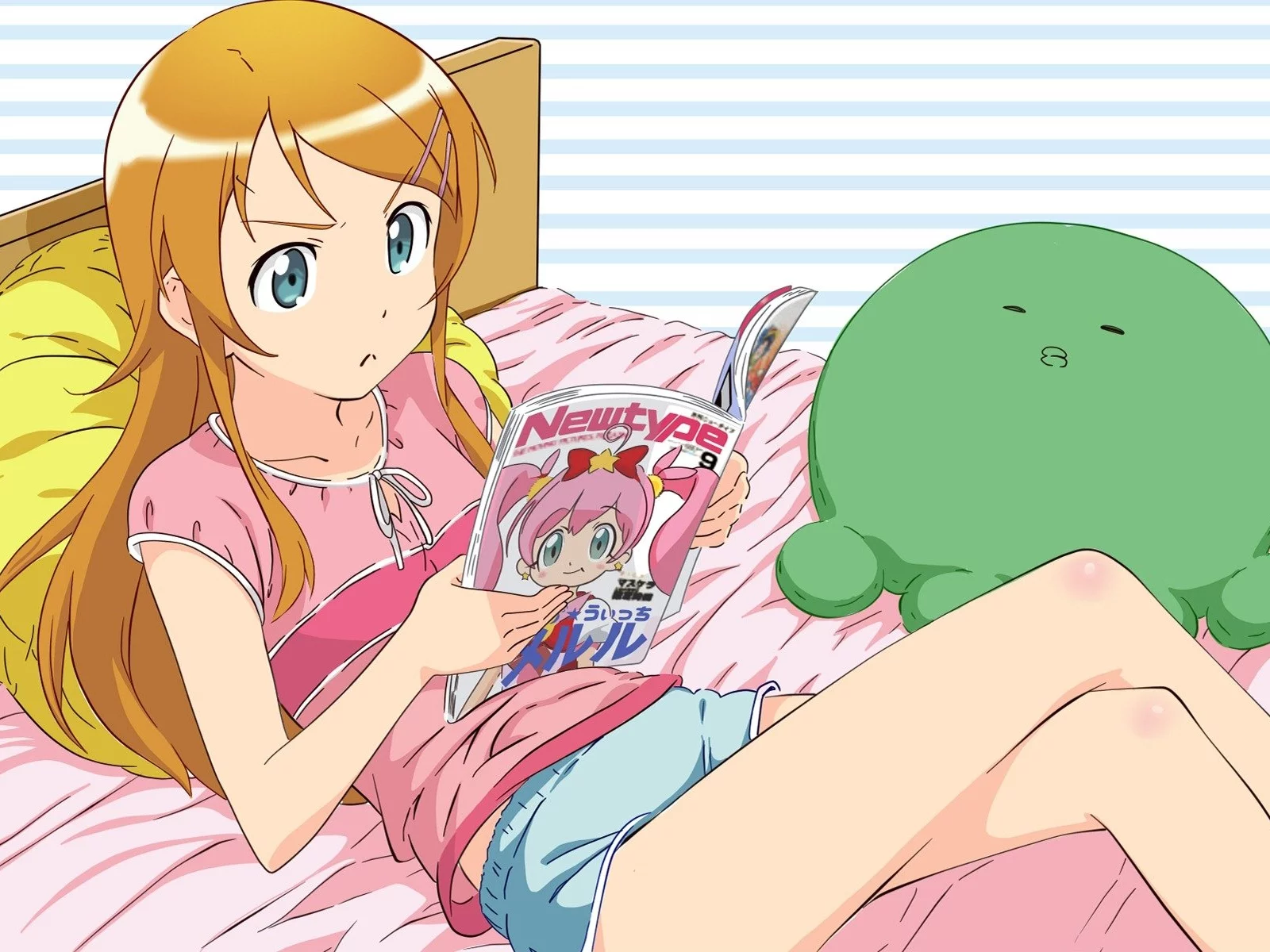
Oreimo Kirino Kousaka

Kirino is the emotional center of Oreimo, even when she is at her most frustrating. She is proud, competitive, stubborn, emotionally guarded, and often demanding, yet those traits are tied to insecurity rather than simple cruelty. Her need to conceal her hobbies shapes the entire early story, and her relationship with Kyosuke is built on equal parts dependence, irritation, and trust. Oreimo Kirino Kousaka works as a lead because the series allows her to be difficult without flattening her into a joke.

Oreimo Kyosuke Kousaka

Kyosuke begins the series as an almost deliberately ordinary protagonist, but that ordinariness becomes useful. He acts as a bridge between different social circles and different emotional truths. He is not especially cool or powerful, yet he repeatedly steps into awkward situations because he cannot ignore someone in trouble. His role in Oreimo is less about dominating the story and more about exposing how everyone around him behaves when put under emotional pressure.

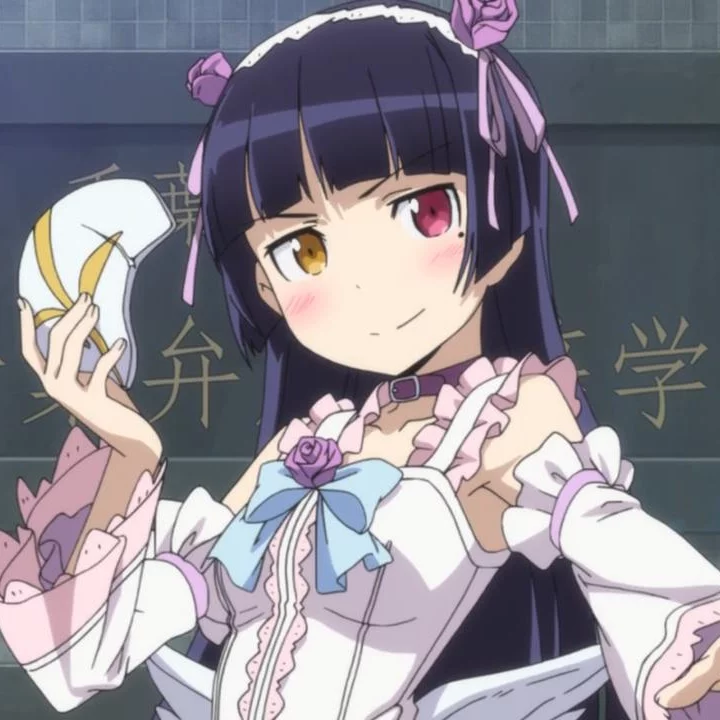
Oreimo Kuroneko and Ayase Aragaki

Among Oreimo characters, Kuroneko and Ayase are especially important because they reveal very different sides of the series. Kuroneko brings self-conscious theatricality, blunt honesty, and a more introspective connection to otaku culture. Her interactions with Kirino are often competitive, but they also expose shared vulnerability. Ayase, by contrast, represents the tension between surface normality and hidden intensity. She begins as Kirino’s refined friend, yet gradually becomes one of the series’ most emotionally extreme and memorable presences. Together, they broaden the cast well beyond the central sibling dynamic.

Oreimo Saori and the Wider Circle

Saori Makishima gives the series another necessary dimension. She is supportive, socially flexible, and far more perceptive than she first appears. She helps create a space where Kirino can interact with other fans without immediately feeling judged. Other supporting characters, including Manami, Kanako, and the Kousaka parents, add further tension by embodying normalcy, family expectation, or competing emotional priorities. Oreimo characters stand out because they are not interchangeable archetypes. Each one pulls the story toward a different version of what acceptance or closeness might mean.

Oreimo Setting and Otaku Culture

Oreimo does not need fantasy worldbuilding to feel specific. Its real strength lies in how it frames contemporary daily life through the lens of hidden fandom. Bedrooms, shopping areas, school spaces, convention-like environments, family homes, and everyday city locations all gain meaning because they become places where secrecy and self-expression collide. The setting is recognizable, but the emotional stakes attached to it are unusually precise.

Otaku culture is central to the series, not just as decoration but as a source of identity. Kirino’s interests shape her relationships, her self-image, and her fear of social rejection. The anime repeatedly returns to the question of how much of oneself can be shown safely in public. In that sense, Oreimo is not only about hobbies. It is about performance, self-censorship, embarrassment, and the relief of being understood by even a small number of people.

That focus helps explain why Oreimo anime stood out when it did. Rather than treating fandom only as a punchline, it made it central to the emotional lives of its cast. The result is a series that feels rooted in a very specific cultural moment while still speaking to broader experiences of concealment and self-definition.

Oreimo Themes and Style

At its core, Oreimo is about hidden identity and reluctant acceptance. Kirino wants to preserve control over how others see her, while Kyosuke is forced to confront the fact that someone close to him has been living with a secret life he never noticed. The series repeatedly asks what it means to support another person when their interests, behavior, or choices make that support inconvenient or uncomfortable.

Another major theme is emotional contradiction. Few characters in Oreimo say exactly what they mean, and even fewer fully understand their own motives. Affection often appears as irritation. Concern becomes interference. Pride becomes distance. This keeps the relationships active and unstable, but it also gives the anime much of its tension. The cast does not move cleanly toward understanding. They stumble, overreact, deny, and circle back.

Stylistically, Oreimo combines bright character design, fast dialogue, expressive reactions, and a modern slice-of-life visual framework with material that can quickly become emotionally sharp. The humor is often built from embarrassment and social friction, yet the series also knows how to pause for sincerity. That shifting tone is one of its defining traits. Oreimo can be playful, uncomfortable, earnest, and provocative within a relatively short span of time.

Oreimo Animation and Production

The anime adaptation works best when it leans into timing and personality. Oreimo is not a series built on grand visual spectacle. Its strength lies in facial expression, conversational rhythm, sudden mood shifts, and the ability to turn a seemingly ordinary exchange into something tense or revealing. Because so much of the story depends on what characters are hiding, reaction shots and pauses matter almost as much as dialogue.

The production also benefits from keeping the world visually familiar. The series is grounded enough that the emotional absurdity of certain situations can stand out more clearly. Kirino’s polished appearance, Kuroneko’s darker aesthetic, Ayase’s composed exterior, and Kyosuke’s ordinary presence all communicate character before much is even said. That clarity helps the ensemble function smoothly.

Another strength is how the anime handles tonal movement. Oreimo can jump from fandom comedy to family argument to romantic discomfort without completely losing coherence. That flexibility is not easy to maintain, but it contributes to the series’ distinct personality and keeps even quieter scenes from feeling flat.

Oreimo Arcs and Relationship Progression

Oreimo develops through relationship shifts more than through large external events. Early episodes focus on Kirino’s secret and the new role Kyosuke takes on as the one person in the family who knows the truth. As the story continues, that basic setup expands into club activity, social conflict, emotional rivalry, and increasingly complicated attachments among the central cast.

What makes the progression notable is that it rarely becomes simpler. New understanding does not erase old awkwardness. Instead, the series layers trust and tension on top of each other. Kirino becomes more open in some ways and more difficult in others. Kyosuke becomes more active, but also more entangled. Supporting characters who first seem comic or secondary gradually become emotionally important.

This makes Oreimo feel less like a straight romantic comedy and more like a character web driven by clashing needs. The story’s most memorable turns often come not from external surprises, but from the moment a character stops hiding what they want, or fails to hide it convincingly.

Oreimo Popularity and Impact

Oreimo became one of the better-known light novel and anime titles of the early 2010s because it was so willing to be specific about its interests and so unafraid of making its audience uncomfortable. It brought discussions of otaku culture, hobby secrecy, and difficult interpersonal dynamics into a mainstream romantic comedy format. That combination made it highly visible and, at times, highly debated.

Its impact also came from its cast. Kirino, Kuroneko, and Ayase in particular became strongly recognizable characters within anime fandom, each representing a different emotional and aesthetic side of the series. Their popularity translated naturally into figures, character goods, and long-term visibility in merchandise culture. Even viewers who disagreed strongly with parts of the story often remembered the character writing, the friction between personalities, and the way the series committed to its central tensions.

Oreimo remains important partly because it reflects a specific period in anime culture so clearly. It helped define how certain kinds of light novel adaptation were discussed, especially those built around sharp dialogue, fan culture, and controversial relationship dynamics. Its legacy is not simple, but it is unmistakable.

Oreimo Figures and Merchandise

Oreimo figures remain closely tied to the series’ strong character appeal. Kirino Kousaka, Kuroneko, Ayase Aragaki, and other central cast members translate easily into collectible form because their designs are immediately recognizable and their personalities are so clearly defined. From expressions to outfits, the series offers plenty of visual material that works well for display pieces and anime merchandise.

Collectors can find Oreimo figures in a range of familiar formats. Nendoroids emphasize the expressive side of characters such as Kirino and Kuroneko, while scale figures often focus on detailed outfits, seated poses, or scene-inspired styling. Pop Up Parade releases offer accessible display options, and prize figures remain a practical way to collect recognizable Oreimo characters in a lighter price range. The series also lends itself well to acrylic stands, keychains, wall art, and other collectibles centered on character illustration.

Because Oreimo is so character-driven, the merchandise works best when it highlights individual presence rather than action. Kirino’s polished look, Kuroneko’s gothic flair, Ayase’s composed elegance, and Kyosuke’s connection to the wider cast all help give the line variety. That makes the series especially suited to collectors who enjoy character-focused anime figures and display pieces with a strong personality.

Browse the full Oreimo figure collection at Online Otaku, from Nendoroids to scale figures, sorted by character.
Created by: Fushimi, Tsukasa (Story), Kanzaki, Hiro (Art)
Year started: 2008
Oreimo Oreimo
Oreimo Oreimo
Sources